Bachelor of Architecture
The Bachelor of Architecture program at SAL School of Architecture is a five-year undergraduate course designed to develop creative, critical, and socially responsive architects. The curriculum is studio-centric, with strong integration of theoretical and technical subjects such as Architectural Design, Building Materials and Construction, Structures, History of Architecture, Landscape design, and Services. Emphasis is placed on hands-on learning through workshops, site visits, and study programs that connect students with real-world contexts. The course encourages exploration of contemporary issues like sustainability, heritage, and urbanism, equipping students with the skills to design meaningful and contextually relevant spaces. Electives and supporting subjects are designed to complement the core studios, allowing students to develop individual interests and design approaches. With a pedagogy focused on inquiry, innovation, and interaction, the program fosters a collaborative learning environment that prepares students to contribute thoughtfully to the built environment and confidently enter the profession or pursue further studies.
We at SAL School of Architecture believe in the phrase 'Thinking by Doing'.
The ethos of our pedagogy lies in experimentation and pragmatism. In each semester, all our students are encouraged to go beyond the boundaries of the conventional syllabus and push towards the unconventional. This can only be achieved when one comes out of their classroom/house and goes to sites of architectural importance, to buildings which are under construction, to places of natural beauty.
Whereby they can co-relate academic learning with the conditions on ground which would not only make them understand the basics better, but also push them to think unconventionally when they are approached with a problem.


Dr. Ramanjyot Shrivastava

Meghna Sutaria
Tarang Mehta

Thomas Mathai
Shweta Mistry

Zubin Choksi
Nigam Oza

Jinal Pathak
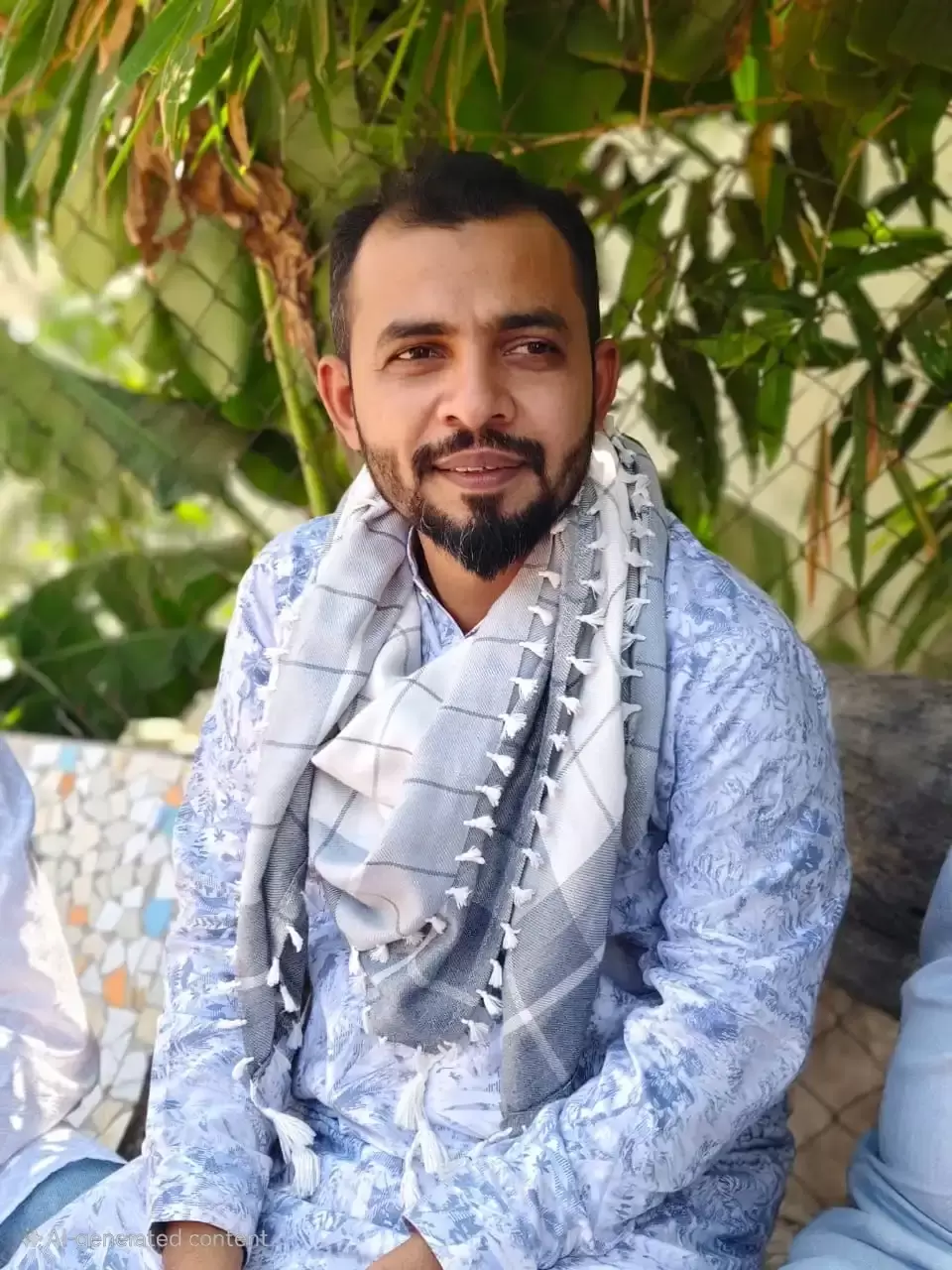
Zaeemuddin Qureshi

Pallavi Agarwal

Jaimin Jadav

Ruchita Patel
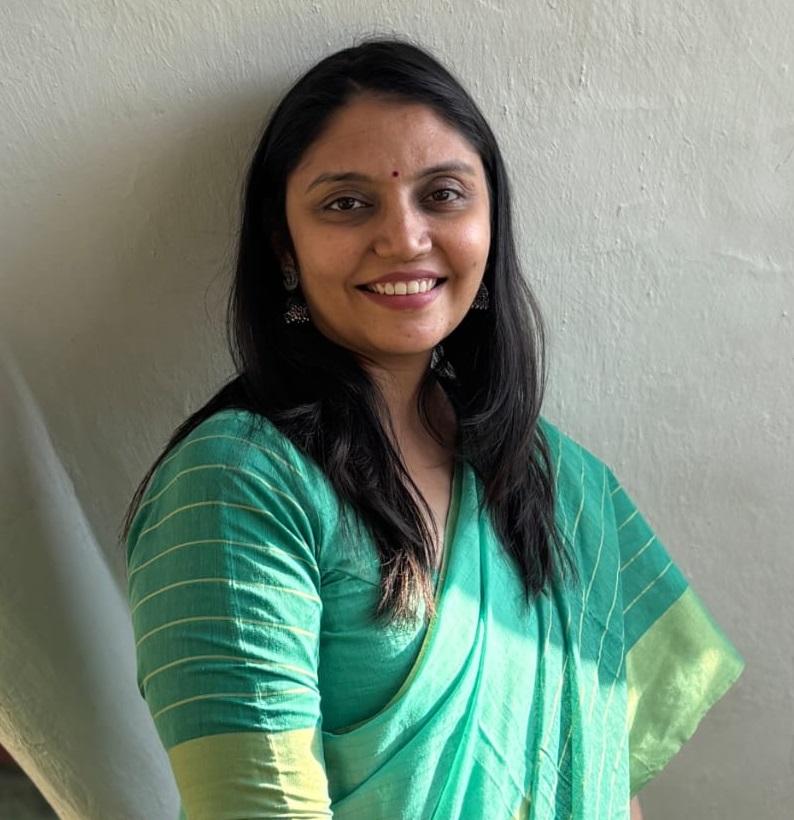
Kaushangi Suthar

Priyatama Sonwane
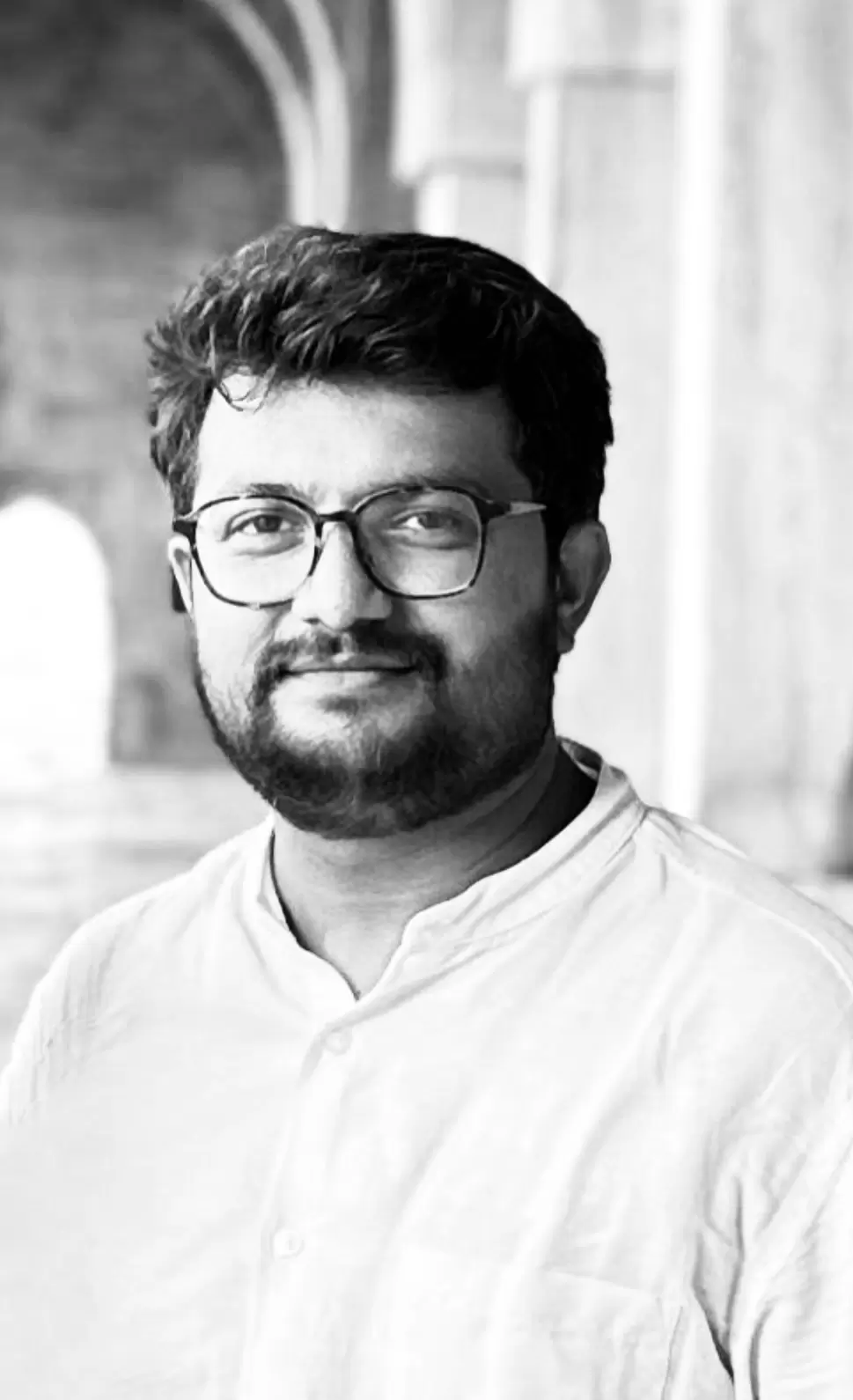
Rahul Soni

Vaishali J Daraniya

Karan Kakaiya

Parth Lavti
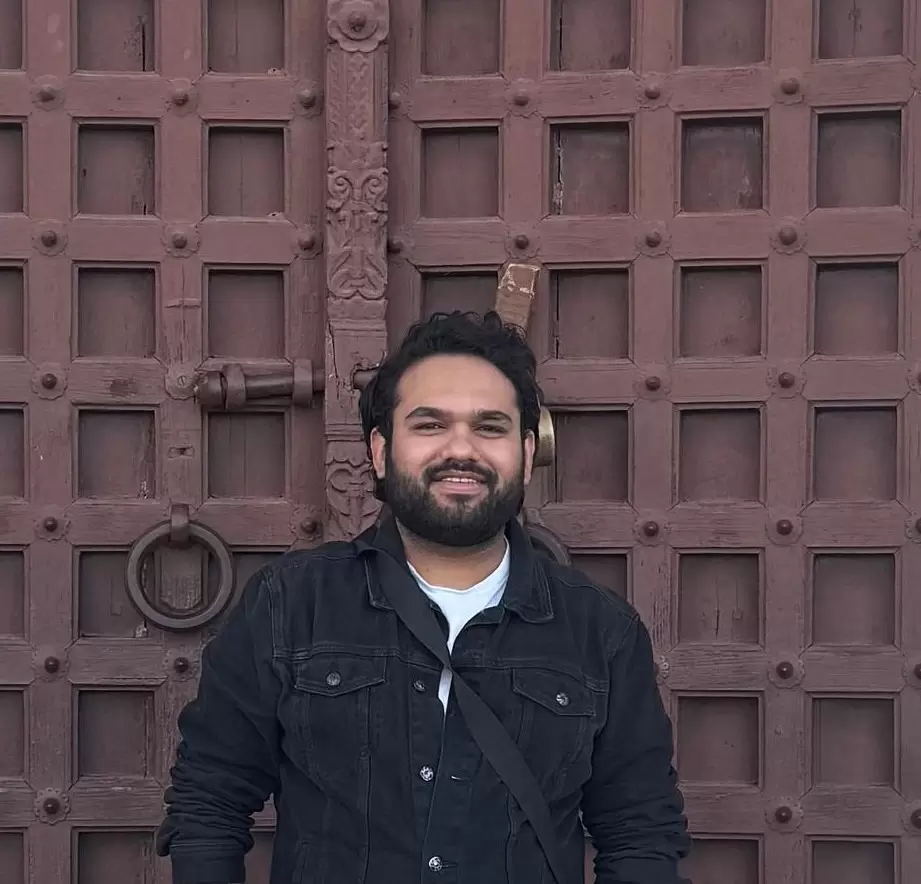
Abhishek Chandarana

Swati Pariath

Jay Tandel
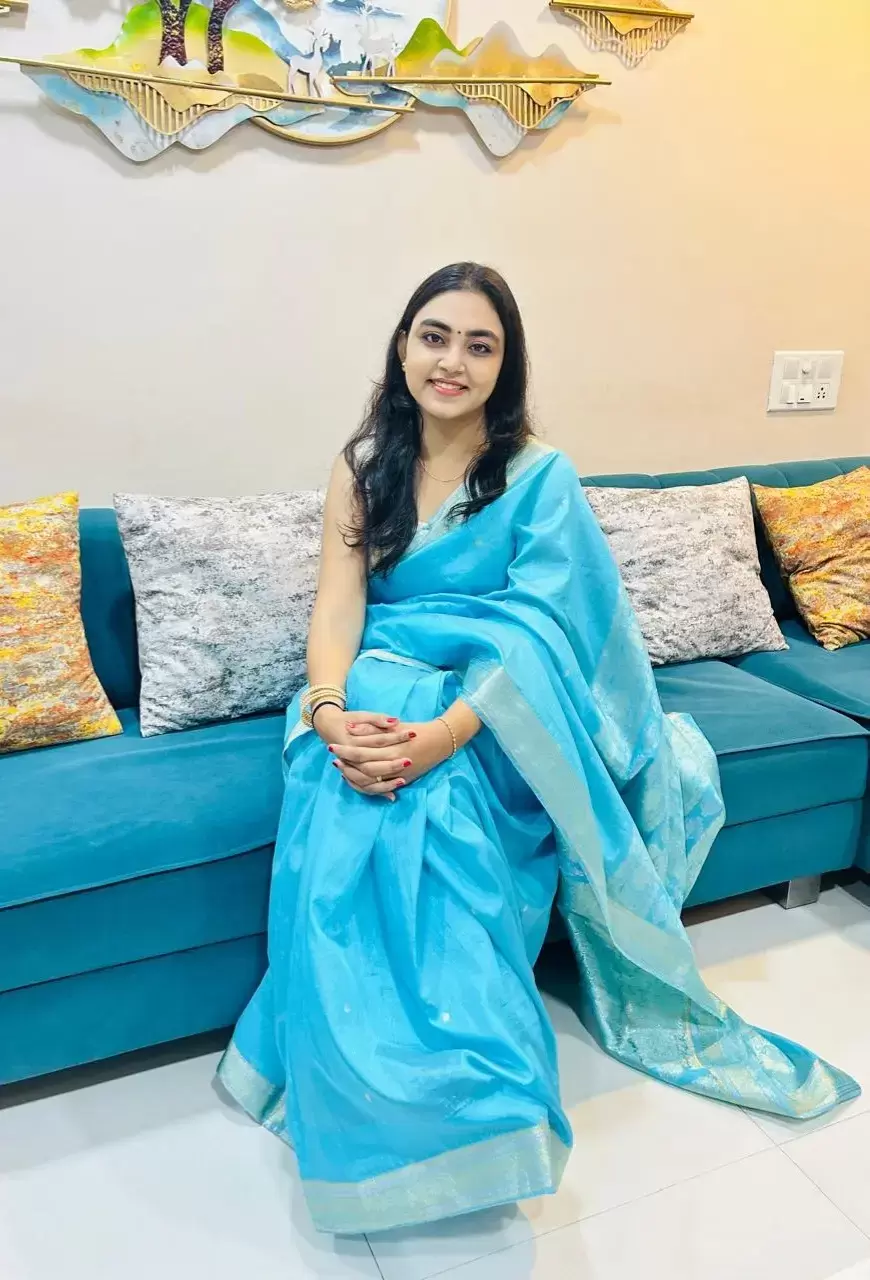
Ruby Patel
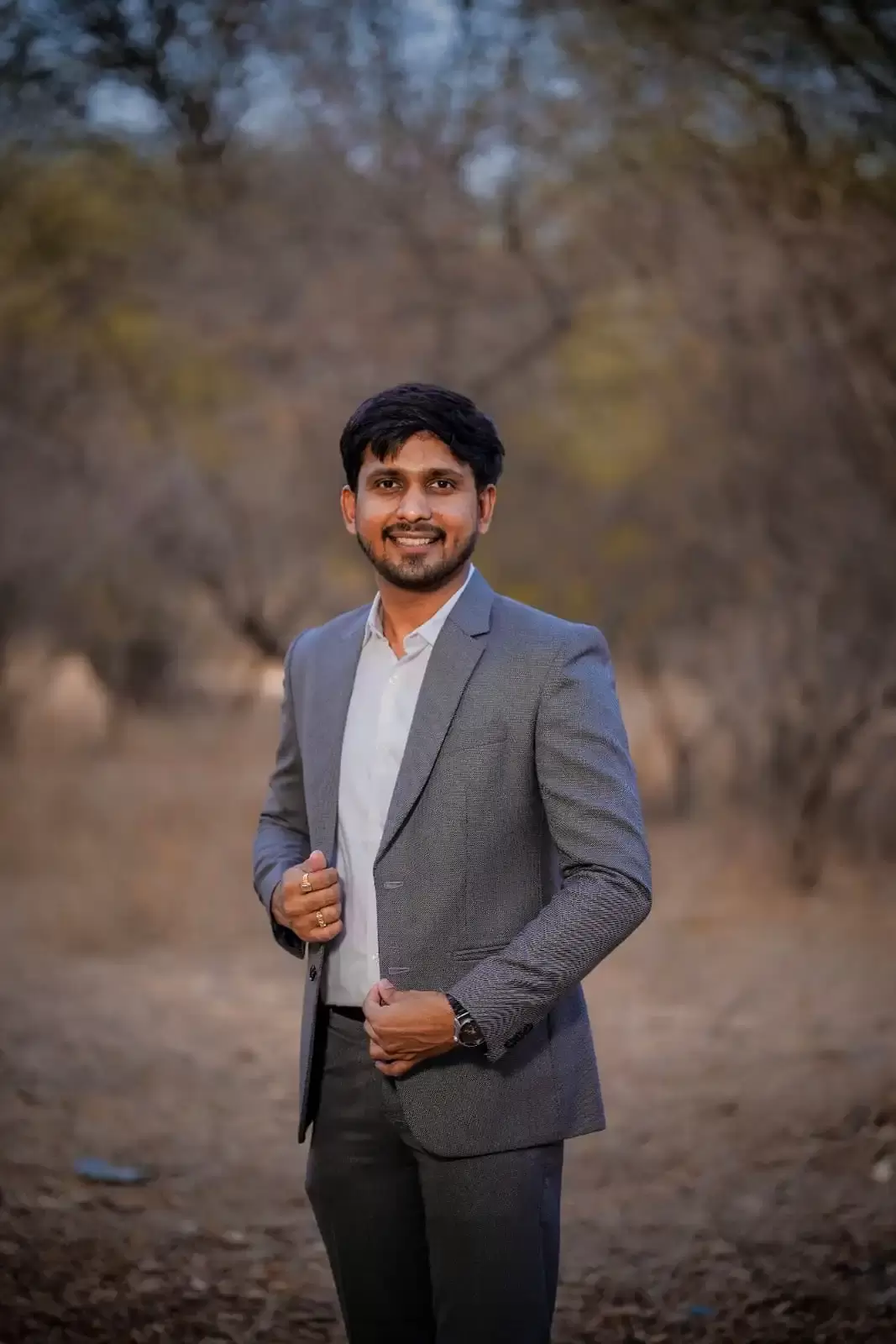
Mikul Patel
Faculty Details
| Name : | |
|---|---|
| Designation : | |
| Qualification : | |
| Specialization : | |
| Experience : | |
| Paper Publication : | |
| Workshop/Training/Seminar/Webinar Organized : | |
| Workshop/Training/Seminar/Webinar Attended : | |
| Email ID : |
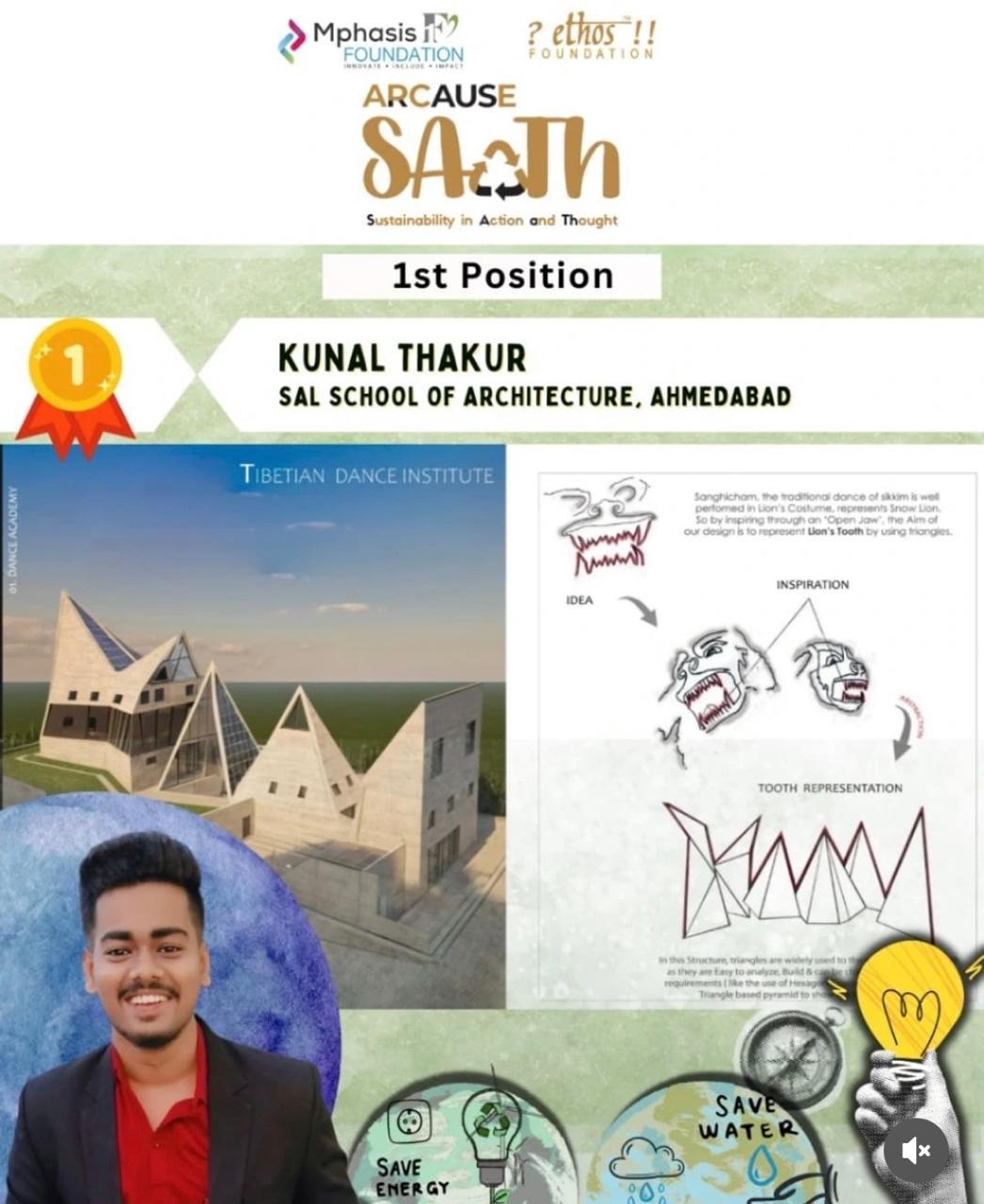
Kunal Thakur
Kunal Thakur secured 1st Position in the 4th Year category at the Student of the Year Awards, for presenting his design Tibetian Dance Institue.
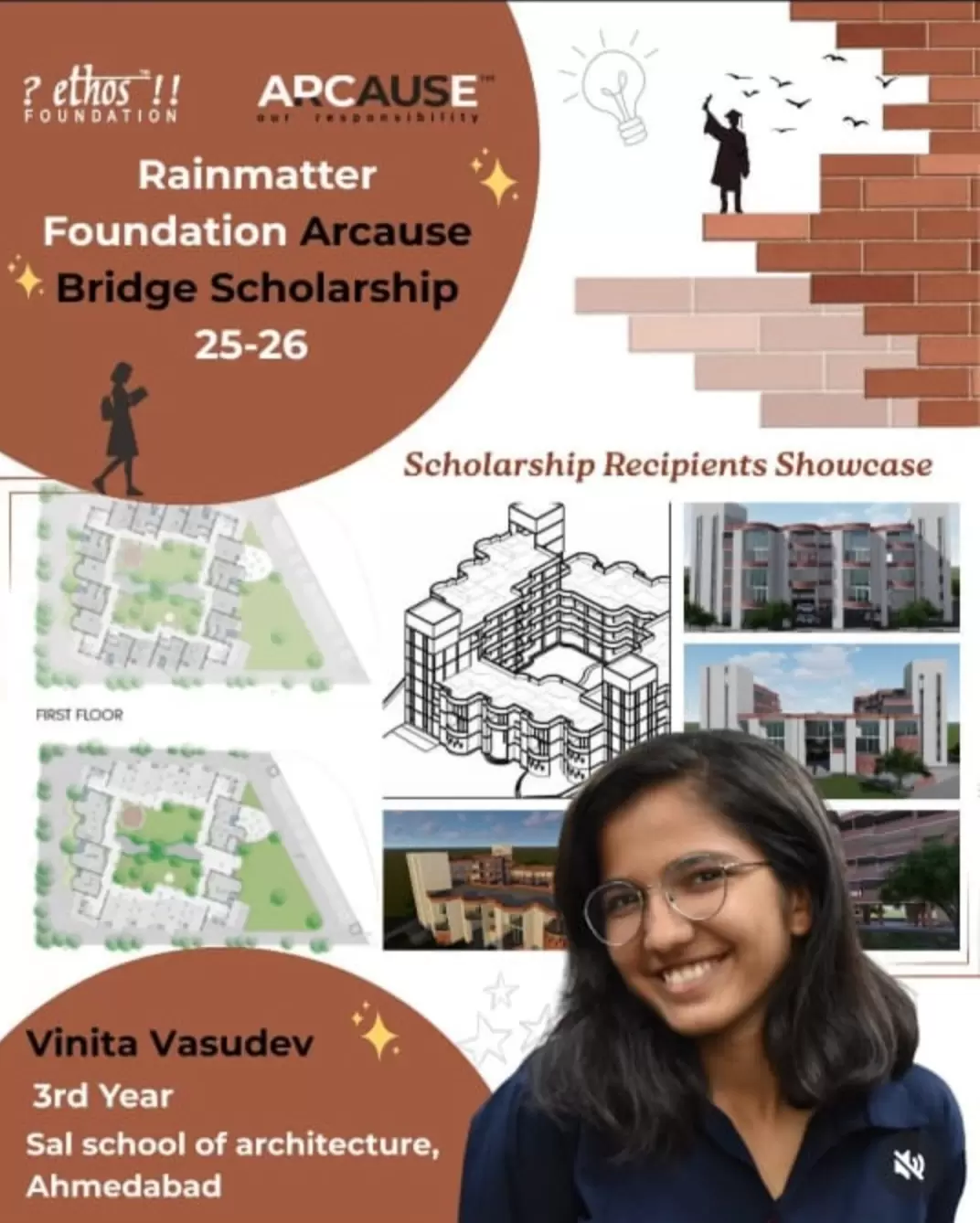
Vinita Vasudev – 3rd Year, SAL School of Architecture,
Vinita Vasudev has been selected as a recipient of the Rainmatter Foundation–Arcause Bridge Scholarship (2025–26), recognizing her academic merit, design capability, and commitment to socially responsible architecture.

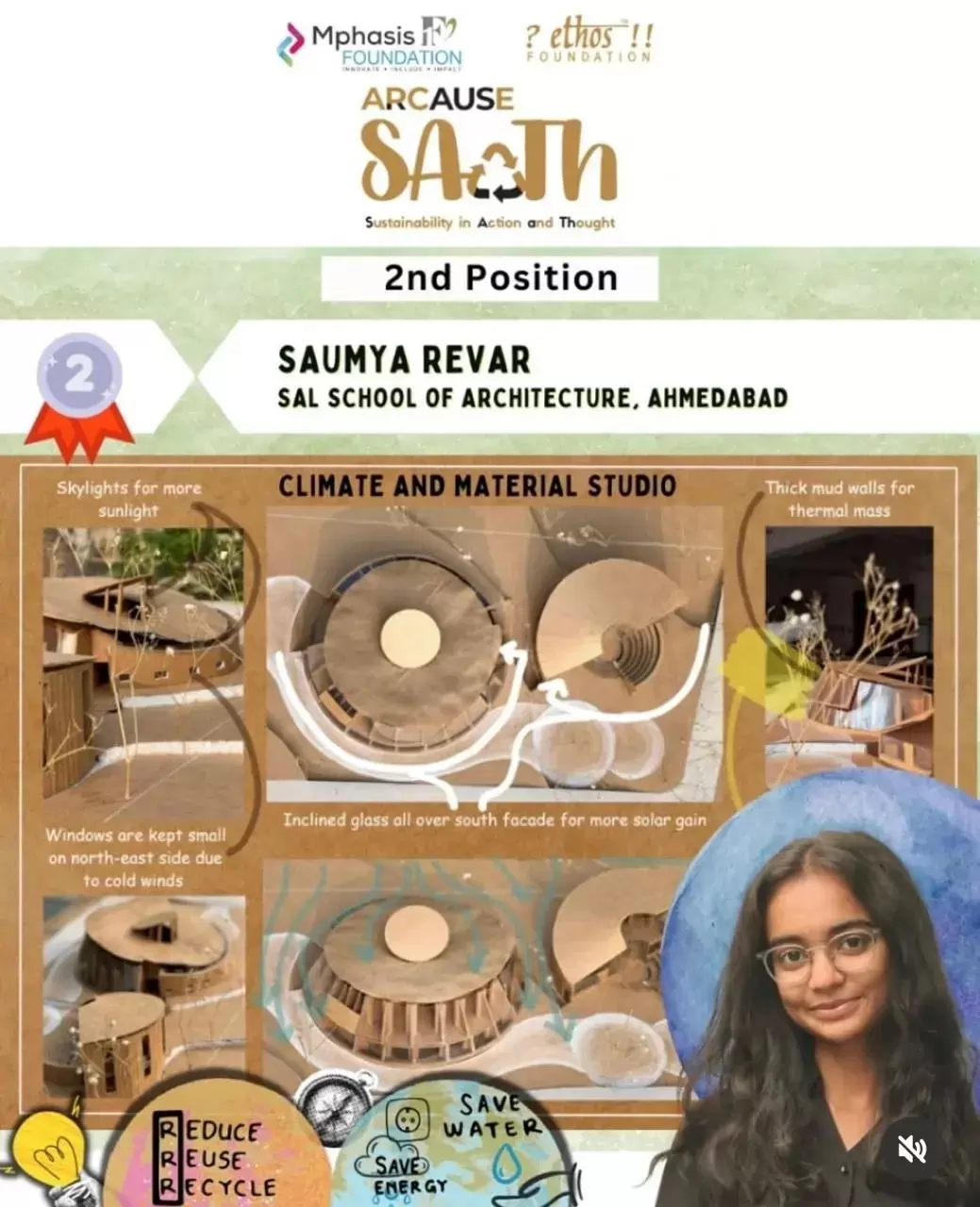
Saumya Revar
Saumya Revar secured 2nd Position in the 2nd Year category at the Student of the Year Awards, for presenting an exceptional academic portfolio focused on Sustainability, demonstrating strong design thinking and environmental responsibility.
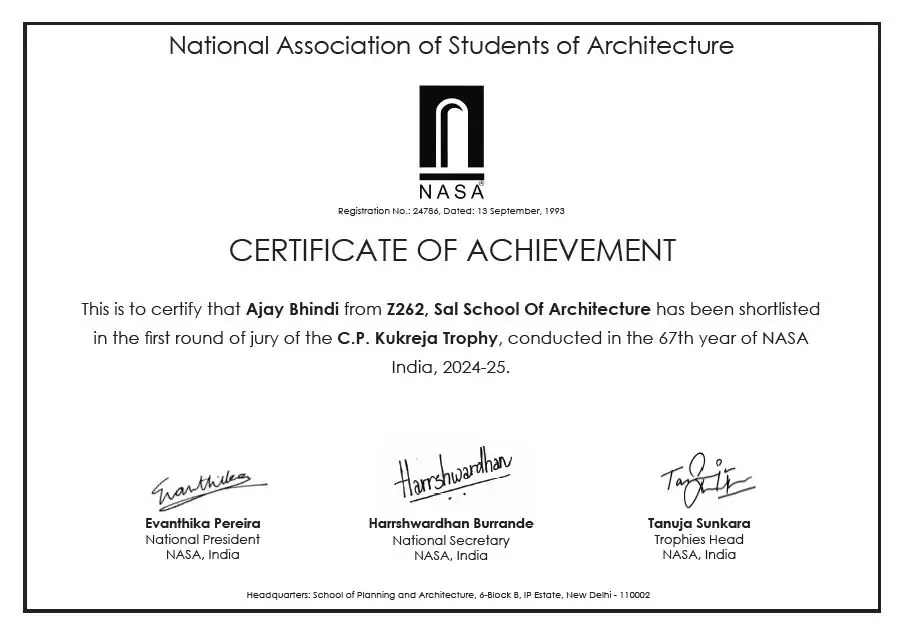
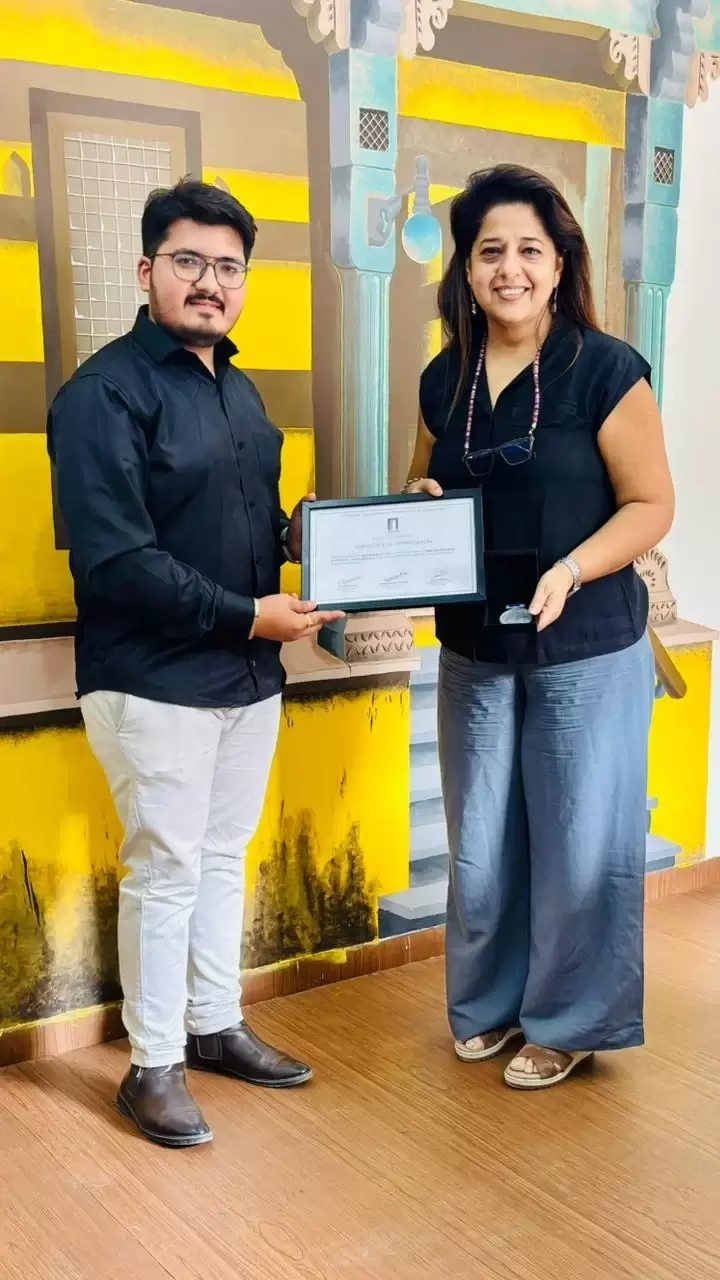
Ajay Bhindi – Z262, SAL School of Architecture
Ajay Bhindi has been shortlisted in the first round of jury for the prestigious C. P. Kukreja Trophy, conducted by NASA India during its 67th year (2024–25), reflecting his strong academic and design excellence at the national level.
Z262, SAL School of Architecture
A team of students were shortlisted in the first round of jury for the prestigious LIK Trophy, conducted by NASA India.
Studio is the central subject in architectural education, forming the foundation of design thinking and creative problem-solving. Each semester, students engage with studio projects that address themes such as spatial design, housing, community architecture, public spaces, or urban intervention. These studios integrate learning from allied subjects, encouraging a holistic approach to design. The studio environment fosters exploration, critical dialogue, and iterative development through drawings, models, and peer discussions. It also nurtures individual expression and collaborative skills, preparing students to respond innovatively to real-world architectural and social challenges.
Studio | Ist year | Foundation |
| Contextual Studio | ||
| 2nd Year | Climate Studio | |
| Housing Studio | ||
| 3rd Year | Institution Studio | |
| Working Drawing Studio | ||
| 4th Year | Office Training | |
| Campus Design Studio | ||
| 5th Year | Urban Design Studio | |
| Thesis |
1st YEAR
Foundation Studio
The Foundation Studio introduces students to the basics of design, space, anthropometry and form through explorations in scale, material, and geometry. Emphasis is placed on observation, creativity, and critical thinking, laying the groundwork for spatial understanding and architectural expression through hands-on exercises, models, and conceptual design tasks.
Contextual Studio
This studio encourages students to respond to local context—social, cultural, and physical—while designing small-scale architectural interventions. Through site visits, mapping, and user analysis, students learn to translate contextual understanding into meaningful spatial experiences and develop sensitivity to place, climate, and materials in the built environment.
2nd Year
Climate Studio
The Climate Studio focuses on designing buildings that respond to environmental factors like light, ventilation, and thermal comfort. Students integrate passive design strategies with spatial planning, learning to create climate-responsive architecture rooted in local contexts and sustainable thinking.
Housing Studio
In this studio, students address residential design across various scales—from individual homes to group housing. Emphasis is placed on user needs, spatial organization, community interaction, and structural logic, helping students balance design aesthetics with functionality and livability.
3rd Year
Institution Studio
The Institution Studio involves designing public or semi-public buildings such as schools, libraries, or cultural centers. Students engage with program complexity, circulation, user diversity, and site responsiveness, developing comprehensive architectural proposals grounded in functionality, spatial articulation, and social relevance.
Working Drawing Studio
This studio bridges design and execution, training students in the preparation of detailed working drawings for architectural projects. Emphasis is placed on accuracy, construction detailing, material specification, and professional drafting standards, fostering practical skills crucial for real-world practice.
4th Year
Office Training
As part of professional practice, students undergo a semester-long internship with architectural firms. This immersive experience exposes them to real-time projects, site work, teamwork, and client interactions, equipping them with industry insights and professional ethics essential for future practice.
Campus Design Studio
This studio challenges students to work at a larger scale, designing comprehensive campus or institutional masterplans. It involves site planning, zoning, connectivity, user hierarchy, and integration of landscape and infrastructure — promoting systems thinking and long-range design vision.
5th Year
Urban Design Studio
Focusing on city-scale issues, this studio introduces students to urban morphology, public space, mobility, and socio-economic patterns. Students analyze existing urban conditions and propose design interventions that enhance liveability, inclusivity, and spatial quality in the public realm.
Thesis
The final semester is dedicated to an individual architectural thesis where students independently research, conceptualize, and develop a design proposal of their choice. It is a culmination of their academic journey, reflecting their design ideology, technical ability, and critical understanding of architecture.
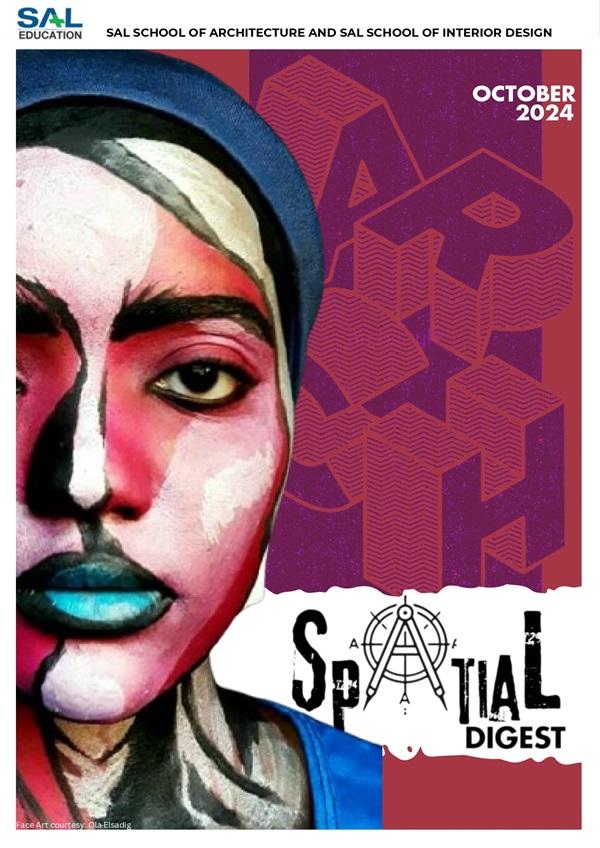
Special Digest